How to Choose the Right Power Source for Your Needs?
Choosing the right power source can be challenging. Many factors impact this decision. It’s essential to understand your needs clearly.
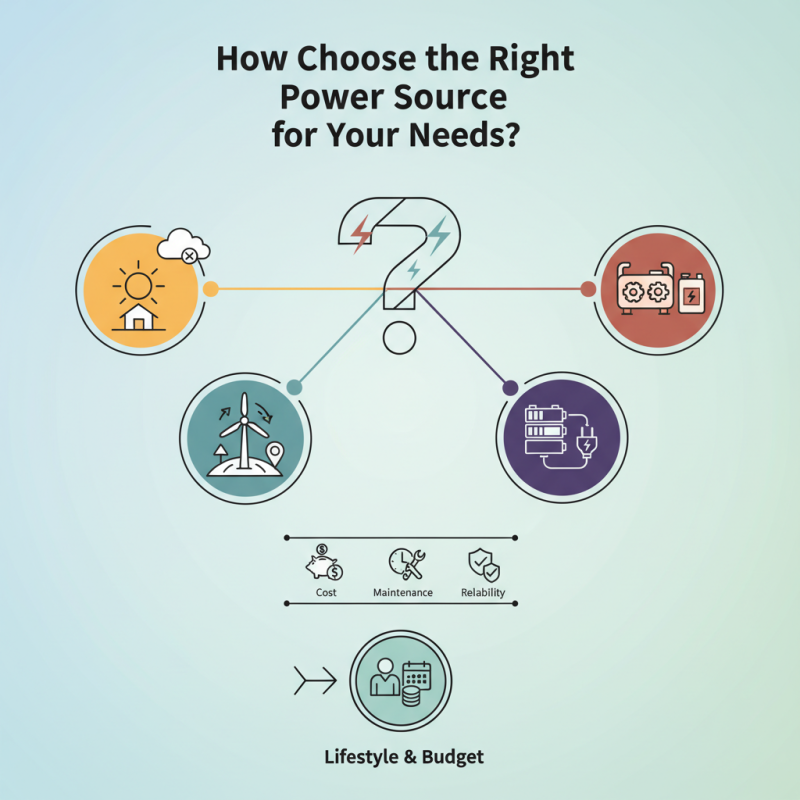
The type of power source you choose affects efficiency and cost. Options include solar, wind, batteries, and generators. Each has its pros and cons. For instance, solar energy is renewable but may not be reliable in cloudy areas. Wind power can generate good energy but needs the right location.
You might feel overwhelmed by the choices available. Take time to assess your specific requirements. Consider reliability, cost, and maintenance. Reflect on your long-term goals. Ultimately, the right power source fits your lifestyle and budget.
Understanding Your Power Requirements
Choosing the right power source starts with understanding your specific needs. Consider what devices you plan to power. Do you need something for small electronics or larger machinery? The demands of your equipment can vary significantly. Analyze the wattage, voltage, and duration of use required. This process often reveals gaps in your initial assumptions.
Think about your setup. Are you in a remote area, or do you have access to a reliable grid? That will impact your options. Solar panels may suit some, while others might consider generators. There are pros and cons to each choice. Also, you may find the initial investment daunting. It’s essential to weigh not just the costs but the long-term benefits.
Many overlook maintenance as a key factor. Regular upkeep can affect performance and lifespan. It’s okay to admit you might not feel confident about DIY repairs. This is common and worth acknowledging. Seek advice or hire help if needed. Evaluating your environment and being realistic about limitations will lead to better decisions. Make sure to take the time to reflect on your priorities and lifestyle.
How to Choose the Right Power Source for Your Needs? - Understanding Your Power Requirements
| Power Source Type |
Suitable Applications |
Advantages |
Disadvantages |
| Battery |
Portable devices, backup power |
Portable, easy to replace |
Limited lifespan, capacity issues |
| Solar |
Outdoor applications, off-grid living |
Renewable, low operating costs |
Weather dependent, high initial cost |
| Generator |
Construction sites, emergency power |
Powerful, versatile |
Noisy, requires fuel |
| Grid Power |
Residential and commercial buildings |
Reliable, established infrastructure |
Vulnerability to outages, not renewable |
| Fuel Cell |
Transportation, remote power |
Clean energy, high efficiency |
High cost, limited infrastructure |
Types of Power Sources: A Comprehensive Overview
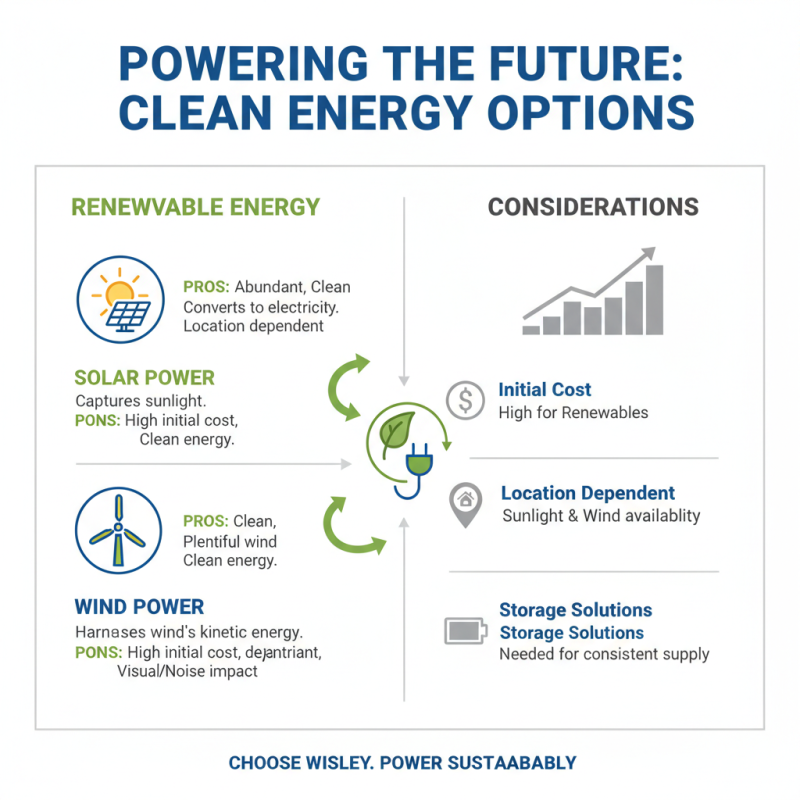
When selecting a power source, various options exist. Renewable energy sources include solar and wind power. They provide clean energy. Solar panels capture sunlight, turning it into electricity. Wind turbines harness the wind’s kinetic energy. Both systems can be installed in various environments. However, initial costs may be high and location-dependent.
For those needing reliability, fossil fuels are an option. Natural gas and diesel power generators are common. They can provide consistent energy. Yet, they contribute to pollution and climate change. This compromise can create concern. People should weigh the importance of sustainability against their energy needs.
Battery systems are another choice. They store electricity generated from various sources. Lithium-ion batteries are popular due to their efficiency. They can serve as backup power. However, their disposal raises environmental questions. In summary, evaluating power sources is complex. Different situations call for different solutions.
Evaluating Efficiency and Reliability of Power Sources
When evaluating power sources, efficiency plays a crucial role. The goal is to maximize output while minimizing waste. Consider energy conversion rates. Some sources might seem efficient but lose power during conversion. For instance, a source that operates at 85% efficiency still wastes 15%. This adds up over time.
Reliability is just as important. A power source may be efficient but not dependable. For example, a solar panel's effectiveness drops significantly on cloudy days. This can lead to unexpected outages. Users must think about their needs. Do you require constant power? A less variable source might be more suitable.
It’s essential to reflect on both efficiency and reliability. Sometimes, a less efficient power source can be more predictable. It’s a delicate balance. Each choice has trade-offs. Taking the time to analyze these factors ensures a more informed decision in the long run.
Power Source Efficiency and Reliability
Cost Analysis of Different Power Sources
When analyzing the cost of different power sources, several factors come into play. Renewable energy sources, like solar and wind, often have high initial costs. However, their long-term savings and environmental benefits are notable. Over time, maintenance costs can be lower compared to traditional fossil fuels. Still, the varying efficiency of these systems can lead to inconsistent power generation.
On the other hand, fossil fuels can seem cheaper upfront. Prices fluctuate often, which creates uncertainty in budgeting. Additionally, the environmental impact of fossil fuels is significant. Despite their current affordability, they may not be sustainable in the future. Therefore, while weighing costs, one must also consider long-term implications.
Battery storage is an emerging technology. It offers a practical solution for balancing energy supply and demand. Though still pricey, the technology is improving. Users often find it hard to decide between immediate savings versus future sustainability. With so many options available, choosing the right power source is more challenging than ever.
Making the Final Decision: Key Considerations
Choosing the right power source requires careful thought. The decision often hinges on specific needs. Different applications demand different considerations. A report from the International Energy Agency (IEA) states that renewable sources are rapidly growing. In fact, they accounted for 29% of global electricity generation by 2021. This shift highlights the importance of sustainability.
Cost is another critical factor. A study by Lazard shows that the cost of solar power has fallen by 89% since 2009. This makes solar energy more accessible for many. However, initial setup costs can still be daunting. Many users may hesitate due to uncertainty about long-term benefits.
Performance factors should not be overlooked. For instance, energy storage systems are crucial for balancing supply and demand. Yet, their efficiency can vary widely. A recent market analysis indicated that battery technology improvements are expected to double energy density by 2025. Understanding these specifications can help make informed choices. Balancing all these factors leads to better energy decisions.
 Skip to content