10 Essential Tips for Choosing the Right Motor and Control Solutions
In today's industrial landscape, selecting the right motor and control solutions is critical. A report from the International Electrotechnical Commission reveals that motors consume approximately 50% of global electricity. This highlights the impact of motor efficiency on sustainability and operational costs.
Many businesses overlook the importance of tailored motor solutions. They often choose standard options that may not meet specific needs. This can lead to inefficiencies and higher energy consumption. The right motor configuration and control system can enhance performance and reduce energy waste.
Investing in the right motor and control solutions is crucial for operational success. Detailed analysis is needed to avoid poor choices. Companies must consider factors like application, load requirements, and control mechanisms. Ultimately, the right decisions can drive profitability and sustainability in an increasingly competitive market.
Understanding the Application Requirements for Motors and Controls
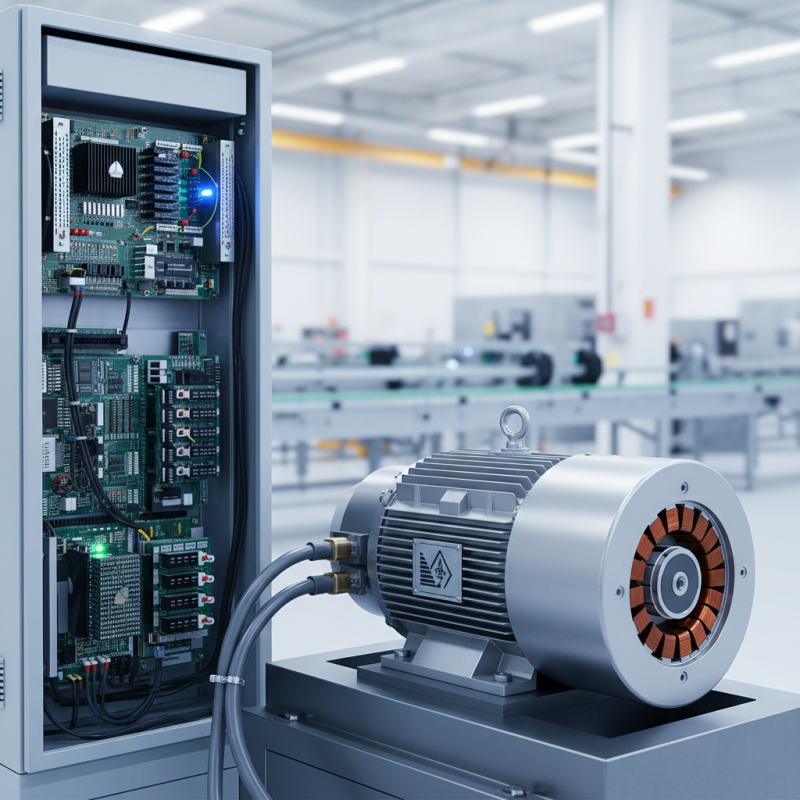
Choosing the right motor and control solution begins with understanding your application requirements. Assessing the specific needs of your project is crucial. Are you looking for high torque, speed control, or efficiency? Each of these factors plays a significant role in your ultimate decision.
Think about the environment where the system will operate. Is it humid, dusty, or subject to temperature extremes? These conditions will influence motor selection. Sometimes, users overlook these environmental factors, leading to equipment failure. The integration of the motor with existing systems also matters. Compatibility can be a challenge.
Performance expectations should be clear. What load will the motor handle? How frequently will it start and stop? Ignoring these details can result in inadequate performance. Be mindful of your budget as well, but don't sacrifice quality for cost. Remember, a well-chosen motor can save you money in the long run. Identify potential pitfalls during your assessment and review your choices critically.
10 Essential Tips for Choosing the Right Motor and Control Solutions - Understanding the Application Requirements for Motors and Controls
| Tip Number |
Tip |
Description |
Application Type |
| 1 |
Define Load Requirements |
Determine the torque and speed requirements based on the load limitations. |
Industrial Automation |
| 2 |
Consider Power Supply |
Match the motor specifications with the available power supply. |
HVAC Systems |
| 3 |
Evaluate Environmental Conditions |
Account for temperature, humidity, and exposure to dust or chemicals. |
Food Processing |
| 4 |
Select the Right Control Type |
Choose between open-loop or closed-loop control systems based on accuracy needs. |
Robotics |
| 5 |
Research Efficiency Ratings |
Look for motors with high efficiency to reduce operating costs. |
Material Handling |
| 6 |
Look at Size and Weight |
Ensure the motor fits in the intended space without compromising performance. |
Compact Machinery |
| 7 |
Check for Noise Levels |
Consider the operational noise to avoid disturbances in sensitive environments. |
Clinical Environments |
| 8 |
Assess Reliability and Maintenance |
Opt for designs that require minimal maintenance while providing robust performance. |
Automotive Applications |
| 9 |
Consider Integration with Existing Systems |
Ensure compatibility with current technologies and setups for seamless integration. |
Energy Systems |
| 10 |
Consult Industry Experts |
Seek advice from professionals to make informed decisions tailored to your applications. |
All Applications |
Evaluating Performance Specifications and Operational Conditions
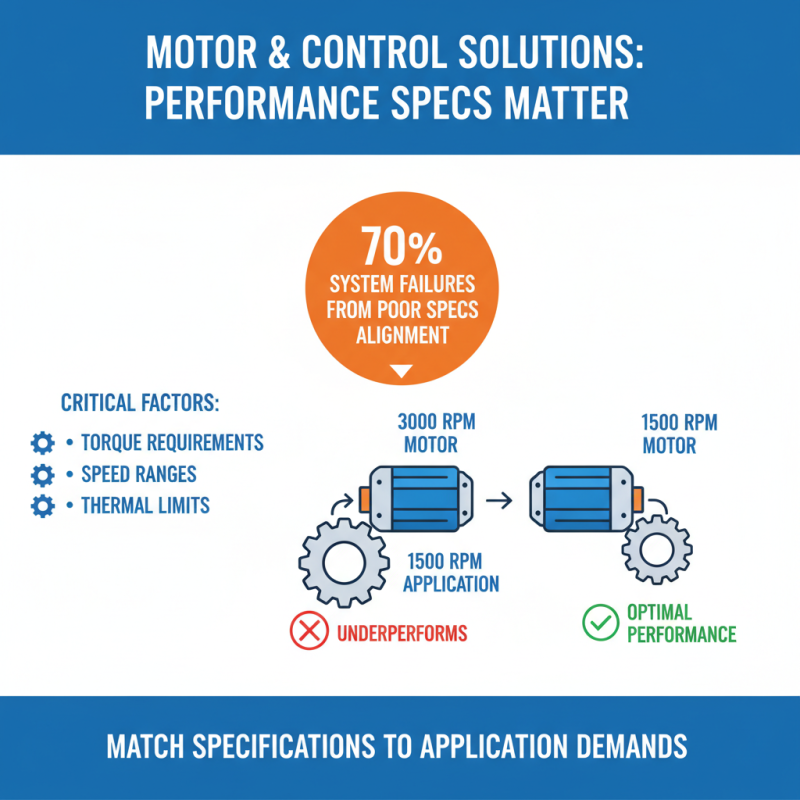
When evaluating motor and control solutions, performance specifications are critical. According to a recent industry report, over 70% of system failures stem from poor specifications alignment. It's vital to examine torque requirements, speed ranges, and thermal limits carefully. For example, a motor designed for 3000 RPM may underperform if used in a 1500 RPM application. Operators must match specifications to application demands.
Operational conditions also play a significant role. Consider environmental factors such as temperature and humidity. Motors operating in extreme conditions can face overheating or corrosion. An American Society of Mechanical Engineers report states that up to 30% of motors fail due to inadequate environmental assessments. It’s essential to assess these elements before finalizing a choice. Think about how vibration and shock may affect motor longevity.
Moreover, efficiency should guide decisions. While many options boast high performance, they may not be the most energy-efficient long-term. A study by the International Energy Agency found that inefficient motor systems can account for up to 25% of industrial electrical consumption. Balancing performance with efficiency requires careful reflection and planning.
Exploring Different Types of Motors and Their Suitable Applications
Selecting the right motor and control solutions is crucial for various applications. Different types of motors serve unique needs. For example, DC motors are optimal for precision tasks. They offer smooth and adjustable speed control.
Meanwhile, stepper motors shine in applications requiring exact positioning. They are ideal for 3D printers and CNC machines.
Understanding the application is key. Induction motors are common in industrial settings. They are robust and efficient but lack precise control.
Servo motors, on the other hand, provide excellent performance for robotics and automation. They allow for tight control over speed and position. However, they can be complex and expensive.
In some cases, oversights occur in selecting a motor type. A motor might provide sufficient power but lack the appropriate control system. This mismatch can lead to inefficient operation.
It's important to evaluate both the motor and control solutions thoroughly. In the end, balancing performance and cost is vital. Thorough research and testing can prevent costly mistakes.
Assessing Control Technologies and Integration Compatibility
Choosing the right motor and control solution involves careful consideration of control technologies and their integration compatibility. A recent industry report indicates that 70% of motor-related failures trace back to compatibility issues. This highlights the importance of assessing how well your chosen systems will work together. Understanding the inputs and outputs of each component is crucial. A lack of compatibility could lead to performance losses and increased maintenance costs.
Furthermore, many facilities overlook the need for standardized communication protocols. According to research, 60% of manufacturers use disparate systems that fail to communicate effectively. This can create bottlenecks in operations and affect overall productivity. It’s essential to evaluate whether your control solutions can integrate with existing technologies. Compatibility should not just focus on the motor and control unit, but also include sensors and software.
Budget considerations often drive decisions, leading some to cut corners on compatibility. However, this approach can result in greater long-term expenses. A project that lacks proper integration might face delays and dissatisfaction among operators. Ensure that the chosen motor and control solutions align with your operational needs for a seamless integration process. Thoughtful evaluation now can prevent significant issues down the line.
Considering Energy Efficiency and Environmental Impact in Selection
Choosing the right motor and control solutions requires careful thought, especially regarding energy efficiency. Energy consumption can significantly impact operational costs. A thoughtful approach to energy-efficient selection can lead to considerable savings. Sometimes, the most powerful motors are not always the best choice. Consider the specific application before making a decision.
Environmental impact is another critical factor. Selecting energy-efficient solutions reduces greenhouse gas emissions. But this is more complex than it appears. Sometimes, manufacturers tout energy efficiency while ignoring the broader ecological footprint. Look beyond just energy usage; consider the materials used in production and disposal.
It's essential to weigh all options. Sometimes consumers gravitate toward lower upfront costs without considering long-term implications. A more expensive motor may offer better efficiency over time. Be wary of too-good-to-be-true solutions. Ensure that your choices align with your sustainability goals. Balancing performance, cost, and ecological impact can be a challenging task.
Energy Efficiency and Environmental Impact of Motor Types
This chart displays the energy efficiency ratings and environmental impacts of different motor types used in various control solutions. The data illustrates that electric motors are generally more energy-efficient compared to hydraulic and pneumatic systems.
 Skip to content