 Skip to content

What Is a Motor Disconnect and Which Type Do You Need?
A motor disconnect is the visible point where power to a motor can be isolated for servicing, inspection, or emergency control. It may look like a simple switch beside a conveyor, pump, or rooftop fan. In practice, its enclosure, rating, location, and operating method can determine whether maintenance is controlled or dangerously uncertain. The wrong device may fit the wall and still fail the application.
The U.S. Department of Energy’s Motor Systems Market Assessment estimated that motor systems represented about 68% of industrial electricity use in U.S. manufacturing. That figure explains why disconnect selection deserves more attention than a catalog shortcut. A small efficiency decision can affect a large operating system. NFPA 70, the National Electrical Code, addresses motor disconnecting means in Article 430. UL 98 covers enclosed and dead-front switches. IEC 60947-3 provides an international framework for switches, disconnectors, and switch-disconnectors. These standards do not turn every installation into the same answer.
A horsepower-rated disconnect may suit a standard indoor motor. A fusible disconnect can add overcurrent protection where the design requires it. A non-fusible switch may work when upstream protection already exists. Outdoor equipment often needs a weather-resistant enclosure. Corrosive areas need stronger material choices. Lockable handles matter during maintenance.
That assumption is easy to make—and often wrong.
The right motor disconnect depends on voltage, current, motor type, fault conditions, environment, and local code requirements. This guide explains those choices with practical detail. It also questions a common mistake: treating the lowest purchase price as the safest total solution. Specification review, qualified installation, and manufacturer documentation remain essential.
What Is a Motor Disconnect and Why Is It Important?
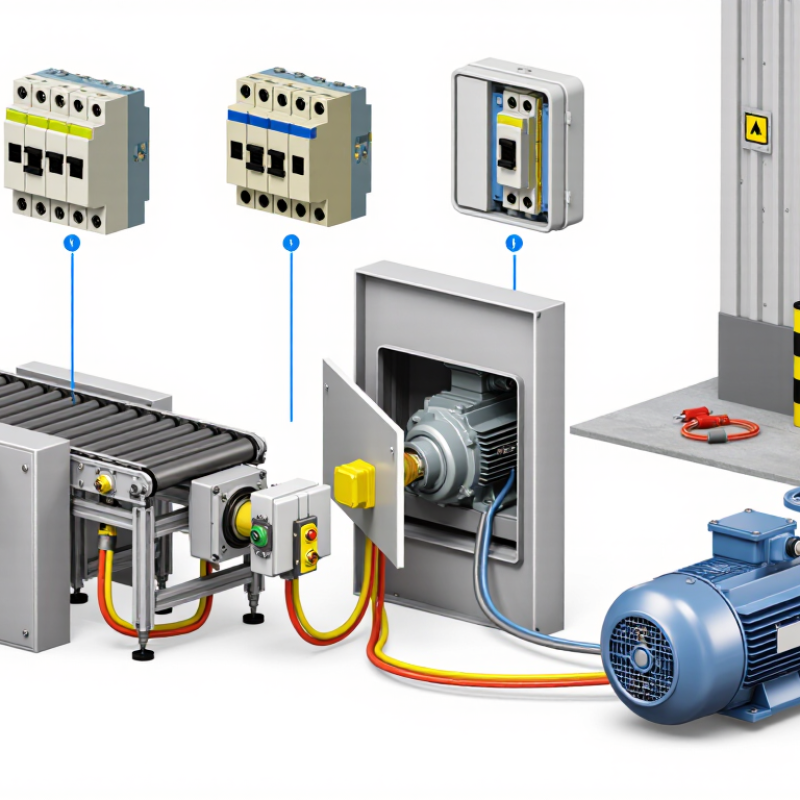
A motor disconnect is a dedicated device that separates a motor from its electrical supply. It gives technicians a clear way to shut off power before inspection, repair, or cleaning. Unlike a control switch, it is designed for isolation, not routine motor operation. This distinction matters when a machine suddenly stops or needs urgent service.
A properly selected disconnect can reduce shock and unexpected-start risks. It should match the motor’s voltage, current, phase, enclosure environment, and installation location. A non-fused disconnect may suit systems with upstream overcurrent protection. A fused type can provide additional circuit protection when correctly coordinated. Local electrical requirements and the motor manufacturer’s data should guide the final choice. In practice, a visible handle near the motor can prevent confusion. Yet installation distance alone does not guarantee safety. Power must be verified as absent with a properly rated tester.
Tips: Choose a disconnect with a durable enclosure for dust, moisture, or outdoor exposure. Confirm the horsepower rating, not only the amperage. Label the device clearly. Lockable handles support safe maintenance procedures. Test the isolation before touching conductors.
A small oversight can create a serious hazard. I have found that unclear labeling causes unnecessary delays during service calls. It is also easy to select a switch that fits physically but lacks the correct motor rating. Review the load details, available fault current, and site conditions before purchasing. If any detail remains uncertain, consult a qualified electrician and follow applicable codes.
What Is a Motor Disconnect and Which Type Do You Need? - What Is a Motor Disconnect and Why Is It Important?
| Disconnect Type | Primary Function | Typical Protection Provided | Common Motor Applications | When It Is Usually Appropriate | Important Selection Factors |
|---|---|---|---|---|---|
| Non-Fusible Safety Switch | Provides a visible, manually operated means of isolating the motor from its power source. | Isolation only; it does not normally provide motor overload or short-circuit protection by itself. | Fans, pumps, compressors, conveyors, and other motors already protected by an upstream circuit breaker or fuses. | When the installation requires a local disconnect near the motor and overcurrent protection is installed elsewhere. | Voltage rating, horsepower rating, continuous current rating, number of poles, enclosure type, and outdoor or indoor location. |
| Fusible Safety Switch | Disconnects the motor and incorporates fuses that interrupt excessive fault current. | Short-circuit and ground-fault protection through replaceable fuses; separate overload protection is generally still required. | Industrial motor branches, higher-fault-current installations, and equipment requiring a local fused disconnect. | When the available fault current, coordination requirements, or equipment design calls for a fused disconnect. | Fuse class and size, interrupting rating, motor full-load current, voltage, poles, enclosure, and coordination with the starter or controller. |
| Circuit-Breaker Disconnect | Combines a disconnecting means with a resettable overcurrent protective device. | Short-circuit and ground-fault protection; motor overload protection may require a separate overload relay or electronic motor protector. | Commercial HVAC equipment, packaged machinery, control panels, and motor circuits where resettable protection is preferred. | When available space, reset capability, adjustable settings, or integration with a panelboard is important. | Thermal-magnetic or electronic trip characteristics, interrupting rating, voltage, pole count, adjustable settings, and code requirements. |
| Motor-Circuit Protector with Disconnecting Function | Provides a disconnecting means and fast short-circuit protection for a motor branch circuit. | Short-circuit and ground-fault protection; it is normally used with a separate overload device for sustained overcurrent. | Motor starters, industrial control panels, machine tools, and applications requiring coordinated motor-circuit protection. | When the motor controller and protective devices are designed as a coordinated combination. | Instantaneous trip adjustment, controller compatibility, motor current, short-circuit current rating, and manufacturer-listed combinations. |
| Manual Motor Starter with Disconnecting Function | Allows local motor switching and can provide basic overload protection for selected small motor applications. | Thermal overload protection and short-circuit protection when used with the required upstream protective device. | Small fans, pumps, blowers, machine tools, and single-motor equipment with straightforward local control. | When local starting, stopping, and overload reset are needed without a full magnetic starter. | Motor full-load current, horsepower, voltage, overload adjustment range, starting duty, enclosure, and suitability for the motor type. |
| Enclosed Disconnect for Outdoor or Wet Locations | Provides local isolation while protecting internal switching components from environmental exposure. | Protection depends on the installed device; the enclosure itself provides environmental protection rather than overload protection. | Rooftop units, outdoor pumps, irrigation equipment, cooling equipment, and washdown areas. | When rain, dust, corrosion, condensation, or hose-directed water may affect the installation. | Enclosure rating, corrosion resistance, temperature, mounting position, cable entry, condensation control, and accessibility. |
Selection note: A motor disconnect is primarily intended to isolate the motor and support safe servicing. The correct installation may also require separate short-circuit, ground-fault, overload, and emergency-stop protection. Confirm voltage, motor full-load current, horsepower, pole count, interrupting rating, enclosure requirements, and applicable local electrical regulations before installation.
Related Posts
-
Top Motor Disconnect Types for Safe Electrical Operation?
-
2026 How to Properly Use a Motor Disconnect for Safety and Efficiency?
-

Why is Motor Disconnect Important for Safe Electrical Operations
-
How to Choose the Best Motor Control Solutions?
-
How to Choose Electric Motor Controller for Your Applications?
-

What is Motor Control and How Does It Influence Human Movement?