Skip to content
Choosing the right power switch is rarely as simple as comparing prices or terminal counts. Global buyers must consider voltage, current, switching frequency, installation space, safety ratings, and expected service life. A switch used inside a compact control panel faces different demands from one installed on outdoor machinery. Moisture, dust, vibration, and repeated operator contact can change the safest choice.
This guide introduces ten common types of power switches, including toggle, rocker, push-button, rotary, slide, DIP, limit, micro, selector, and emergency-stop designs. Each type has practical strengths and limits. A rocker switch may suit a household device, while a sealed toggle switch may perform better in a harsh industrial enclosure. However, product names can be inconsistent across suppliers. Careful specification checks are essential.
From real purchasing work, small details often cause the biggest problems. A connector may fit physically but fail under the rated load. A glossy datasheet may also omit derating information, ingress protection, or certification scope. Buyers should verify test reports, material specifications, operating temperature, and supplier traceability before approving samples. It is also wise to test the switch in its actual circuit, not only on a bench.
No single design wins every application. That is the point. The following comparison focuses on function, durability, compliance, sourcing considerations, and typical use cases. It aims to support informed decisions, while acknowledging that regional standards and project conditions may require professional review.

Power switches are mechanical or electronic devices that open, close, or redirect an electrical circuit. When contacts meet, current flows; when they separate, the circuit stops. Simple action, serious consequences. A poorly rated switch may overheat, arc, or fail under repeated loads. Global buyers commonly compare toggle, rocker, push-button, rotary, slide, selector, limit, pressure, proximity, and emergency-stop switches. Each type suits a different control task.
The key specification is not appearance. Check voltage, current, switching frequency, contact material, ingress protection, and operating temperature. IEC 60669-1 covers switches for household and similar fixed electrical installations, while IEC 60947-5-1 addresses control-circuit devices used in industrial applications. These standards help buyers compare test requirements across markets.
The International Energy Agency reported that global electricity demand rose by about 4% in 2024, increasing pressure on safe distribution and control equipment. More powered equipment means more switching cycles.
In practical inspections, loose terminals and unsuitable ratings remain common weaknesses. This is easy to overlook. A control switch may handle a tiny signal, while a power switch carries a heavy motor load. The distinction matters.
Buyers should also verify local certification, circuit diagrams, and realistic fault conditions before approval. A datasheet can look complete, yet installation details may still be missing.
Global buyers commonly specify ten switch categories: toggle, rocker, push-button, rotary, slide, DIP, limit, pressure, thermal, and circuit-breaker switches. Each suits a different operating environment. Toggle and rocker switches work well on control panels, while push-buttons support frequent machine commands. Rotary switches select circuits or voltage ranges, and slide switches fit compact consumer equipment.
DIP switches configure circuit settings during installation. Limit switches detect movement in doors, conveyors, and actuators. Pressure switches respond to air or fluid changes, while thermal switches protect equipment from overheating. Circuit breakers combine switching with overcurrent protection, making them essential in distribution boards. The categories overlap sometimes. That is worth checking.
The International Energy Agency’s Electricity 2024 report expects global electricity demand to grow by about 4% in both 2024 and 2025. This expansion increases demand for reliable switching in factories, buildings, charging systems, and renewable-energy installations. The IEA’s Renewables 2024 report also recorded approximately 510 GW of renewable capacity additions in 2023, creating more applications for isolators, disconnect switches, and protective breakers.
Selection should begin with voltage, current, switching frequency, ingress protection, temperature, and fault requirements. IEC 60947-2 covers low-voltage circuit breakers, while IEC 60669-1 addresses switches for household and similar fixed installations. A practical mistake is choosing by appearance alone. A compact switch may fit the panel yet fail under motor inrush, dust, vibration, or repeated mechanical stress.
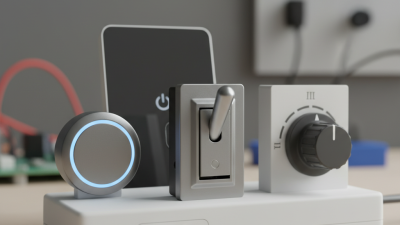
Power switches control current by opening or closing an electrical path. Their operating principles differ, even when their housings look similar. A toggle switch uses a lever to move metal contacts. A rocker switch works similarly, using a rocking actuator. Push-button switches close or open contacts when pressed, often with spring return.
Rotary switches select circuits through a turning contact mechanism. Slide switches move contacts along fixed terminals. DIP switches use small internal toggles for configuration settings. Limit switches respond to physical movement, such as a machine guard reaching its endpoint. Reed switches use magnetic fields to operate sealed contacts. Pressure switches react when fluid or air pressure reaches a set point. Thermal switches change state when temperature crosses a calibrated limit. Simple in theory.
Tips: Match voltage, current, contact form, insulation, and environmental rating before purchase. Check whether the load is resistive, inductive, or motor-driven. A motor may create a sharp starting surge. That detail is often underestimated. Confirm terminal spacing and mounting dimensions with a real sample, not only a drawing.
Reliable selection also requires checking switching life, contact resistance, and protection against dust or moisture. In practical panel work, loose terminals and unsuitable ratings cause more failures than the actuator itself. However, datasheets can omit installation realities. Cable length, vibration, heat, and repeated impact deserve review. Use qualified personnel for testing, and verify compliance with the destination market’s electrical requirements.
Top 10 Types of Power Switches for Global Buyers
Comparing power switches requires more than checking voltage and price. Common choices include toggle, rocker, push-button, rotary, slide, DIP, selector, limit, disconnect, and circuit-breaker switches. Each type suits a different control task. A factory panel may need a rotary selector, while a compact device may require a slide switch. Check rated voltage, current, switching capacity, contact resistance, and electrical life. Mechanical life also matters in equipment used thousands of times daily.
The IEC 60947-1 standard provides a useful framework for low-voltage switchgear performance and testing. Buyers should also verify insulation voltage, impulse withstand voltage, operating temperature, and enclosure protection. IP ratings should follow IEC 60529, especially when dust, oil, or water is present. The International Energy Agency’s Electricity 2024 report expects global electricity demand to grow by about 4% in 2024. That trend increases pressure on reliable control components. However, a higher rating is not always better. Oversized switches can increase cost and installation space.
Tips: Match the switch to the actual load, not the expected maximum alone. Confirm AC or DC operation. DC arcs can be harder to interrupt. Request test reports, material declarations, terminal drawings, and samples before volume orders. I have seen buyers overlook inrush current. It caused early contact wear. A perfect selection is difficult; application testing still deserves more attention.
This comparison uses representative maximum ratings commonly found in commercial switch families. Actual ratings vary by design, load type, certification, switching cycles, and manufacturer specifications.
Buyers should compare both electrical capacity and application requirements: toggle and rocker switches often support higher currents, while DIP and tact switches are mainly intended for low-power control or signal applications.
Global buyers select power switches by application, not appearance. A toggle switch suits simple machinery, while a rocker switch fits compact control panels. Push-button switches support frequent operator input. Rotary switches handle several settings, and slide switches work well in space-limited devices. Selector switches provide clear mode control. DIP switches support internal configuration, but they are unsuitable for frequent operation. Limit switches detect movement. Emergency-stop switches require rapid access and dependable mechanical action. Thermal switches respond to temperature changes, while pressure switches monitor fluid or air systems.
The electrical load must guide the decision. Check voltage, current, inrush current, contact material, and expected switching cycles. A motor may briefly draw several times its running current. That detail can damage an undersized contact. For outdoor equipment, review the IP rating, operating temperature, vibration resistance, and sealing method. Terminal style also matters. Screw, solder, quick-connect, and wire-lead designs affect assembly speed and maintenance.
Global sourcing adds another layer. Confirm recognized safety approvals for the target market, technical files, traceability, and consistent inspection records. Do not rely on a catalog image. Request drawings, test data, samples, and change-control procedures. Experienced buyers compare total service life, not only unit price. A cheaper switch may create costly downtime. Still, specifications can be incomplete. A laboratory rating may not reflect dust, moisture, or rushed operator handling. Pilot testing under real conditions remains essential. Small oversights often become large procurement problems.