What Are the Top Types of Motor Control Solutions in 2026?
Motor control solutions are becoming the quiet intelligence behind modern machines. In 2026, manufacturers will demand more than simple start-and-stop operation. They will seek precise speed control, lower energy consumption, safer motion, and clearer performance data. A motor cabinet may contain variable frequency drives, servo drives, soft starters, PLC-based controls, and connected monitoring systems. Each option solves a different problem.
Dr. John G. Kassakian, a respected power electronics scholar, described the importance of this field clearly: “Power electronics is the technology that enables us to control and convert electrical energy.” His observation remains highly relevant. Motor control solutions translate electrical power into controlled movement, whether a conveyor moves steadily or a robotic arm stops within millimeters. The best choice depends on load behavior, duty cycle, maintenance skills, installation space, and the surrounding network.
Yet, the industry should avoid treating digital connectivity as an automatic improvement. More data does not always mean better control. A dusty factory floor, an oversized drive, or poorly tuned feedback can still reduce reliability. That matters.
This guide examines the top types of motor control solutions expected to shape 2026. It compares their operating principles, practical strengths, energy effects, and typical applications. Readers will also see where each technology may disappoint. Real performance depends on engineering judgment, not marketing language. A solution that works beautifully in a packaging line may perform poorly in a pump station. That uncomfortable detail deserves attention.
Motor Control Solutions: Definition, Scope, and Core Functions
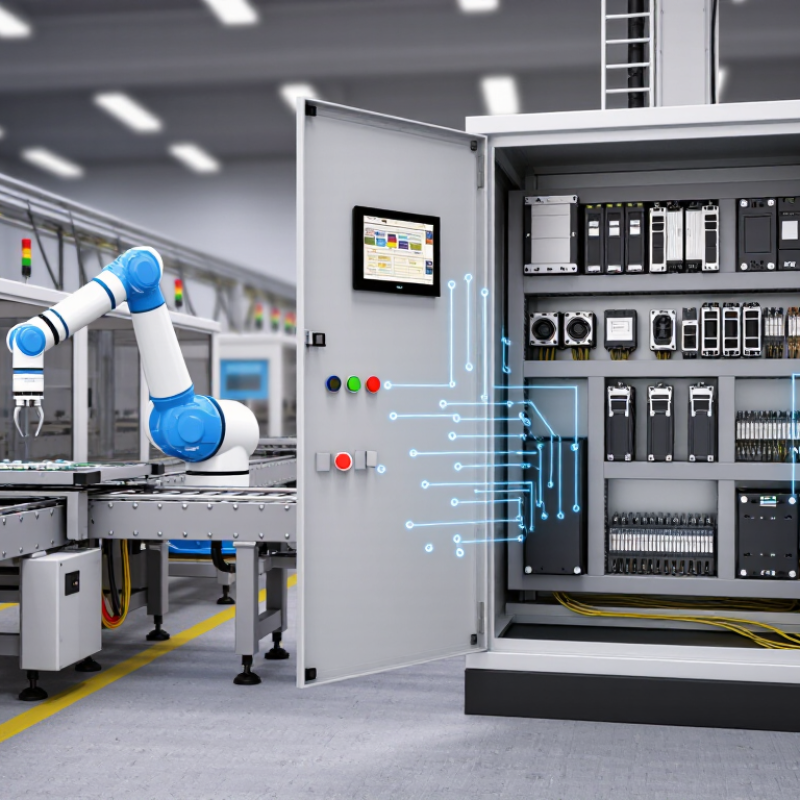
Motor control solutions are systems that manage how electric motors start, run, stop, and respond to changing loads. Their scope includes drives, soft starters, contactors, controllers, sensors, protection devices, and monitoring software. Together, these components regulate speed, torque, direction, current, and operating temperature.
Variable-frequency drives remain important in 2026 because they match motor speed with real demand. This can reduce energy use in pumps, fans, and conveyors. Soft starters limit inrush current during acceleration. Servo systems provide precise motion for robotics, packaging, and automated inspection. Integrated controller solutions connect motors with sensors, programmable logic, and industrial networks. The correct choice depends on load behavior, duty cycle, accuracy, and maintenance skills.
Protection is not an optional feature. Effective solutions detect overloads, phase loss, overheating, stalled rotors, and abnormal vibration. Feedback from encoders or current sensors helps maintain stable performance. Newer systems may also use edge analytics to identify bearing wear before a shutdown occurs. Useful data must still be interpreted carefully. A clean dashboard can hide poor sensor placement or incorrect settings. In commissioning work, small errors matter. A loose terminal, unsuitable ramp time, or neglected cooling path can damage equipment. Engineers should test real operating conditions, document changes, and review alarms with maintenance teams. The process is rarely perfect, and assumptions sometimes need to be challenged.
Top Types of Motor Control Solutions in 2026
Representative normalized speed-command profiles for widely used motor-control approaches. Values show commanded motor speed as a percentage of rated speed during a 10-second start-up sequence; they are technical examples rather than market-share estimates.
Key insight: Direct-on-line control reaches full speed almost immediately, while soft starters and variable-frequency drives provide controlled acceleration. Servo drives offer the smoothest motion profile for high-precision applications.
The Main Types of Motor Control Solutions in 2026
The main types of motor control solutions in 2026 are variable frequency drives, servo systems, soft starters, and integrated motor control centers. Each serves a different operating problem.
Variable frequency drives adjust motor speed by changing frequency and voltage. They suit pumps, fans, compressors, and conveyors.
The International Energy Agency’s Energy Efficiency 2024 report states that electric motor systems use about half of global electricity.
The U.S. Department of Energy also reports that motor-driven equipment can represent nearly 70% of industrial electricity use.
These figures make speed control more than a technical upgrade. It can reduce wasted energy during partial-load operation.
Servo drives provide accurate position, speed, and torque control. They are common in robotics, packaging, and high-speed machinery.
Soft starters limit starting current and mechanical shock. They fit large pumps and conveyors with frequent starts.
Integrated control centers combine protection, switching, monitoring, and communication. Their value grows when maintenance teams need live fault data.
Still, the choice is not always obvious. A servo system may be excessive for a simple fan. A soft starter may disappoint when continuous speed adjustment is required.
Tips: Match the controller to the load profile, not only the motor rating. Check acceleration time, starting frequency, ambient heat, and harmonics. Leave space for maintenance. Field experience shows that poor commissioning can erase expected savings. That part is often underestimated. Use measurements before and after installation, and question optimistic payback claims.
How Each Motor Control Solution Works
A motor control solution shapes how a motor starts, runs, and responds to changing loads. The right choice depends on the machine, power supply, and desired speed control. A simple contactor with overload protection switches a motor directly on or off. It suits pumps and fans that run at a steady speed. When the contacts close, full supply voltage reaches the motor. It is straightforward, but starting current can be high.
A soft starter reduces that initial shock. It gradually raises the voltage, helping limit current and mechanical strain. Picture a loaded conveyor beginning to move without a sudden jerk. Once the motor reaches operating speed, the soft starter typically allows it to run at full voltage. It does not provide broad speed adjustment during normal operation.
A variable-frequency drive changes the frequency and voltage supplied to an AC motor. This lets operators adjust speed to match demand, such as slowing a fan when less airflow is needed. Servo systems use feedback from sensors to correct position and speed precisely, making them useful for robotics and packaging equipment. Stepper controls move a motor in measured increments, though missed steps can occur under excessive load.
No solution is automatically best. Wiring, motor ratings, cooling, and commissioning all matter, and real machines sometimes behave differently than expected.
Key Selection Criteria for Different Motor Applications
What Are the Top Types of Motor Control Solutions in 2026?
Key Selection Criteria for Different Motor Applications
Choosing a motor control solution starts with the load, not a product label. A conveyor that runs at one steady speed has different needs from a pump that must adjust flow throughout the day. Fixed-speed starters may suit simple, predictable duties. Variable-frequency drives can regulate speed and reduce mechanical stress during starts. Servo systems offer precise positioning for packaging or robotic equipment, but their added complexity may not be justified for a basic fan.
Check the motor’s rated power, voltage, current, and duty cycle against the controller’s limits. Then consider the operating environment. Dust, heat, moisture, and vibration can shorten service life if the enclosure and cooling are poorly matched. For a pump room, smooth acceleration can help limit pressure surges. On a machine tool, response time and positioning accuracy may matter more than energy savings. Small details count.
Control integration also matters. Confirm that the solution can communicate with existing sensors, safety circuits, and plant controls. Review fault reporting, maintenance access, and the availability of qualified support. A sophisticated controller is not automatically the better choice. I have seen selection discussions focus heavily on efficiency while overlooking how often operators need to change settings. That can be a costly blind spot. When application data is incomplete, measure actual load patterns before final selection; estimates are useful, but they can be wrong.
Emerging Trends Shaping Motor Control Technologies in 2026
What Are the Top Types of Motor Control Solutions in 2026?
Emerging Trends Shaping Motor Control Technologies in 2026
Motor control is moving beyond speed regulation. Variable frequency drives, servo systems, soft starters, and integrated PLC controls now support connected production lines. The International Energy Agency’s Energy Efficiency 2024 report estimates that electric motor systems consume about 53% of global electricity. Even small efficiency gains can therefore produce measurable savings.
Sensor-rich drives are becoming more practical in 2026. Current, vibration, temperature, and load data can reveal misalignment before a conveyor stops. The U.S. Department of Energy reports that motor-driven equipment uses roughly 68% of industrial electricity. This makes predictive maintenance more than a software trend. It becomes an operating decision.
Regenerative braking is also gaining attention in elevators, cranes, and automated vehicles. Silicon carbide power components may reduce switching losses and cabinet heat. Cybersecurity is entering the control conversation, too. Networked drives need secure updates and clear access policies. That changes quickly. Not every factory needs the same architecture. A small workshop may gain more from a reliable soft starter than a complex digital platform. Forecasts can miss this practical difference. Engineers still need to test heat, noise, response time, and maintenance skills on the shop floor. Data helps, but imperfect data remains a serious weakness.
 Skip to content