What Are the Best China Power Distribution Solutions?

Choosing the best power distribution solutions in China requires more than comparing equipment prices. It demands a clear understanding of load conditions, regional grid requirements, safety standards, and long-term operating costs. A modern factory may depend on medium-voltage switchgear, dry-type transformers, intelligent monitoring, and backup systems working together without interruption. A commercial building may need a different balance between space, efficiency, redundancy, and maintenance access.

Local experience matters. China’s manufacturers and engineering teams serve diverse environments, from coastal industrial parks to inland facilities with dust, heat, or unstable power demand. Reliable suppliers should provide tested components, traceable documentation, installation guidance, and responsive technical support. They should also explain how their systems meet applicable national and international standards, rather than relying on broad marketing claims.

Details matter here.

This guide examines practical power distribution solutions for industrial, commercial, infrastructure, and renewable-energy applications. It considers busbar systems, substations, protection devices, energy management platforms, and smart-grid technologies. It also looks at integration, because excellent equipment can still perform poorly when designs are poorly coordinated. In my assessment, the strongest solution is rarely the most sophisticated one. It is the solution that matches real loads, future expansion plans, budget limits, and the skills of the local maintenance team.

No system is flawless. Product availability, commissioning quality, and after-sales response can vary between suppliers. Buyers should verify certifications, factory testing records, project references, warranty terms, and spare-parts support before signing a contract. A careful evaluation may take longer, but it can prevent overheating cables, nuisance trips, unplanned downtime, and expensive redesigns later.

What Are the Best China Power Distribution Solutions?

China’s Power Distribution Demand: Grid Investment and Load-Growth Data

China’s power distribution market is expanding under heavier industrial, digital, and residential loads. The China Electricity Council reported national electricity consumption of about 9.85 trillion kWh in 2024, up 6.8% year on year. Grid construction investment also exceeded 600 billion yuan, according to its 2024 industry data. These figures show why distribution planning cannot rely on yesterday’s load profiles.

The International Energy Agency’s Electricity 2024 report identified China as a major driver of global demand growth. Manufacturing, electric vehicles, cooling, and data facilities are adding pressure at different hours. Practical solutions include automated medium-voltage feeders, compact substations, advanced metering, and voltage-quality monitoring. Flexible transformers can respond to uneven loads. Distributed storage can reduce short peaks, although its cost and operating life need careful review. Not every site needs the same package.

Tips: Start with feeder-level measurements, not national averages. Compare seasonal peaks, fault records, and transformer loading before selecting equipment. Leave spare capacity for fast-growing districts, but avoid excessive oversizing. Data definitions can differ between reports, and that matters. A 6.8% national increase may hide much faster growth in one industrial zone. This is where many plans become optimistic. Independent engineering checks and transparent tender specifications improve reliability, maintainability, and long-term value.

China’s Distribution Network Architecture: 10 kV, 35 kV, 110 kV, and 220 kV

China’s distribution network is built around clear voltage tiers: 220 kV, 110 kV, 35 kV, and 10 kV. Each level serves a different operational purpose.

The 220 kV network usually transfers bulk power across regions and supplies major grid substations. At 110 kV, power moves closer to cities, industrial zones, and large commercial loads. Substations reduce this voltage for local distribution. The 35 kV level often supports rural networks, mines, factories, and concentrated agricultural areas. It offers longer feeder distances than 10 kV, but requires careful insulation and protection planning.

The 10 kV system is the visible working layer for many urban and industrial users. Ring networks can improve supply continuity, while radial feeders may reduce investment costs. Automatic reclosers, sectionalizing switches, and properly coordinated relays help isolate faults quickly. A practical design also checks transformer capacity, cable temperature, short-circuit current, and future load growth. Small details matter.

Field assessments often reveal uneven loading between feeders. A neat diagram can mislead. Soil conditions, seasonal demand, and limited substation space may change the preferred solution. Engineers should verify current Chinese grid codes, local utility requirements, and site measurements before selecting equipment. A technically correct plan may still perform poorly if maintenance access is ignored. Safety margins should be realistic, not excessive.

What Are the Best China Power Distribution Solutions? — China’s Distribution Network Architecture: 10 kV, 35 kV, 110 kV, and 220 kV
Nominal Voltage Common Network Role Typical Supply Point or Application Typical Equipment Main Advantages Key Planning Considerations
10 kV Medium-voltage distribution Urban and rural distribution feeders supplying distribution transformers, commercial areas, residential communities, public facilities, and light industrial loads. 10 kV switchgear, ring-main units, vacuum circuit breakers, overhead or underground feeders, distribution transformers, sectionalizers, and reclosers. Good balance between distribution reach, equipment cost, fault protection, and compatibility with common 400/230 V low-voltage customer supply systems. Feeder capacity, voltage drop, short-circuit level, load transfer capability, automation, cable routing, and reliability requirements should be assessed for each service area.
35 kV Medium-voltage subtransmission Suburban, rural, agricultural, renewable-energy, and industrial areas where larger supply blocks must be transferred over longer distances than a typical 10 kV feeder. 35 kV substations, outdoor or indoor switchgear, overhead lines, power transformers, protection relays, capacitor banks, and feeder automation equipment. Provides greater transfer capacity and lower current for a given power level, helping reduce losses and voltage drop on extended regional feeders. Long-distance line corridors, lightning and insulation coordination, right-of-way, distributed generation, transformer capacity, and coordination with 10 kV downstream networks.
110 kV High-voltage regional supply Regional grid interconnection and primary supply to city, county, industrial, railway, and large renewable-energy substations. 110 kV substations, power transformers, circuit breakers, disconnectors, current and voltage transformers, busbars, protection systems, and SCADA equipment. Enables efficient regional power transfer and supplies multiple lower-voltage substations from a stronger and more interconnected network. Substation siting, system stability, N-1 security, short-circuit current, reactive-power management, environmental approvals, and integration with 35 kV or 10 kV feeders.
220 kV High-voltage backbone and bulk supply Intercity and provincial transmission corridors, major load-center supply, large generating plants, and high-capacity connections to 220/110 kV substations. 220 kV substations, high-capacity transformers, transmission lines, high-voltage circuit breakers, shunt reactors or capacitor banks, protection, communication, and wide-area control systems. Supports large power transfers over long distances with lower current-related losses and strengthens the backbone of regional and provincial networks. Power-flow limits, transient and voltage stability, corridor planning, electromagnetic and environmental requirements, protection coordination, and secure connection to higher-voltage systems.

Note: These voltage levels describe commonly used functions in China’s power system architecture. Actual voltage selection depends on regional grid standards, load density, supply distance, reliability criteria, network topology, distributed generation, and utility planning requirements. China’s AC power frequency is 50 Hz; customer utilization voltage is commonly 380/220 V in three-phase/four-wire low-voltage systems.

Smart Grid Solutions: Automation, AMI, and SAIDI Reliability Metrics

Modern power distribution depends on visibility, fast switching, and trustworthy field data. Smart grid solutions connect feeder sensors, automated switches, and an outage management platform. In a control room, operators can locate a fault, isolate the damaged section, and restore healthy customers within minutes. The process is practical, not magical. It requires tested settings, clear procedures, and crews who understand local feeder behavior.

Advanced metering infrastructure (AMI) adds a second view of the network. Two-way meters report outages, voltage conditions, and restoration status at customer premises. This information can support load forecasting and confirm whether power has returned. AMI data also needs disciplined validation. A meter may report late because of weak communications, not a real outage. That distinction matters when calculating SAIDI, the average interruption duration experienced by customers. Utilities should compare AMI events with switch records, crew notes, and weather data. A single dashboard is convenient. Not always.

SAIDI reliability metrics turn operational performance into a measurable target. Teams can track monthly changes by feeder, customer class, and interruption cause. High values may reveal aging equipment, vegetation exposure, poor protection coordination, or slow dispatch. However, metric improvement can become misleading if short interruptions are ignored or exclusions are poorly documented. In field reviews, engineers should inspect relay logs, battery condition, and restoration timestamps. I have found that small timestamp errors can distort a yearly result. Metrics can mislead. Continuous audits, transparent definitions, and realistic maintenance plans make automation and AMI more credible.

Renewable Integration: Managing China’s 2023 Wind and Solar Capacity

China’s renewable expansion is reshaping power distribution. The National Energy Administration reported 441.34 GW of wind capacity and 609.49 GW of solar capacity by the end of 2023. Together, they exceeded 1,050 GW. The IEA’s Renewables 2023 report found that China contributed nearly 60% of global renewable capacity additions that year.

Capacity alone is not usable electricity. Wind and solar output changes within minutes, while demand follows factories, homes, and transport systems. Distribution networks need stronger substations, flexible transformers, and accurate forecasting. Battery storage can reduce evening pressure, but it cannot solve every regional constraint. Reactive power control and automated voltage management are also important. The China Electricity Council has repeatedly highlighted flexibility and grid stability as critical priorities. Still, a common weakness remains: projects may be connected quickly, while local distribution upgrades lag behind. No single solution fits every province.

Tips: Start with measured load data, not assumptions. Map solar and wind output against hourly demand. Upgrade congested feeders before adding more generation. Use storage where price differences justify it. Review performance during extreme heat and low-wind periods. Mistakes often appear outside average conditions.

Supplier Evaluation: GB/IEC Compliance, Efficiency, Safety, and Lifecycle Cost

What Are the Best China Power Distribution Solutions?

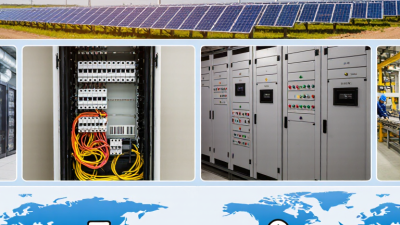
Selecting a power distribution solution in China requires more than comparing purchase prices. Start by checking GB and applicable IEC compliance through traceable test reports, factory inspections, and clear technical drawings. Confirm ratings for voltage, short-circuit withstand, temperature rise, ingress protection, and coordination between protective devices. A low-cost panel can become expensive when overheating causes downtime. Look for copper connections with documented torque values, accessible cable compartments, and tested insulation distances.

Efficiency should be measured under real operating conditions, not only at rated load. Review transformer losses, busbar temperature, power factor, harmonics, and standby consumption. Safety depends on arc-fault risk assessment, interlocks, grounding continuity, labeling, and safe maintenance access. Lifecycle cost also includes spare parts, technician training, inspection frequency, energy losses, and disposal planning. A supplier should provide calculation files, inspection records, commissioning procedures, and responsive technical support. Claims without evidence deserve caution.

Tips: Request recent GB/IEC certificates and test reports. Compare five-year operating costs, not only quotations. Ask for a sample inspection checklist. Visit a similar installation if possible. Keep assumptions visible. Real projects are rarely perfect, and some suppliers may overlook small coordination gaps until commissioning. Independent verification can expose those weaknesses before energization. Review the design again when the load profile changes.

Go to Top